


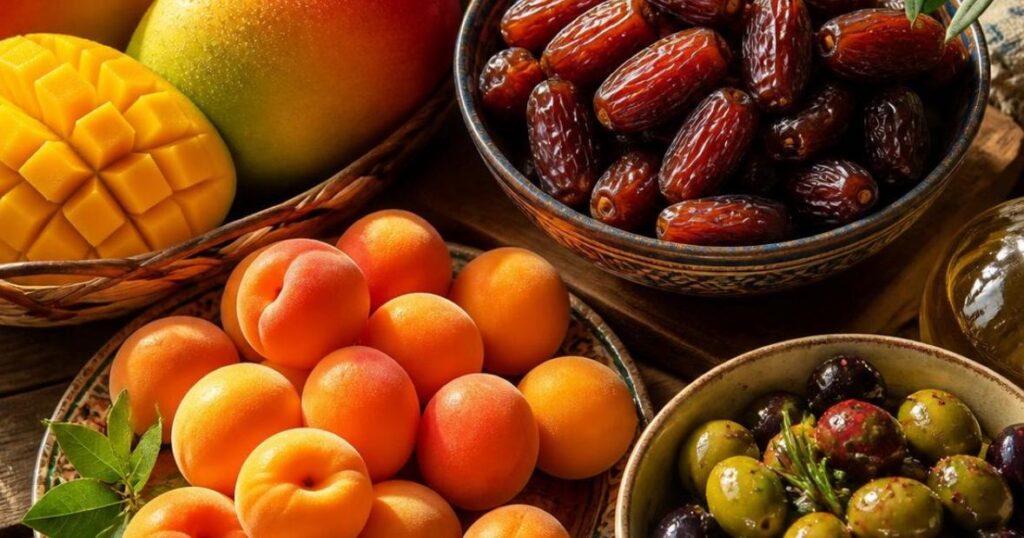
As the summer days go on, so do the bountiful harvests of stone fruits. Stone fruits have been consumed for thousands of years, across many cultures. Stone fruits, also known as drupes, are fruits that have a central pit containing a seed. In these fruits, unlike fruits that have seeds embedded in their flesh or that open to release their seeds, the seeds are spread by decay, digestion, or predation. Peaches, cherries, plums and nectarines are all stone fruits. Olives, apricots, dates and mangoes are also stone fruits with interesting histories that make the present all the more delicious… read on to learn about these fascinating fruits!
Olives
 One of the first foods that people think about when they think about the Mediterranean diet is olives – and for good reason. Olives or olive oil are featured in almost every dish of countries lining the Mediterranean, whether used in tapas, in baked goods, for sautéing, in marinades, as a dressing, to finish a plate with a drizzle on top, or even in desserts. The possibilities are endless.
The olive was first domesticated between 8,000 and 6,000 years ago. It was extensively used as fuel for lamps, kilns, and heating in early Mediterranean civilizations, in addition to being enjoyed as part of the diet. Nowadays, with olives being grown and shipped all over the world, cultures across continents can enjoy their distinct flavor and many health benefits, including their heart-healthy monounsaturated fats and antioxidants.
Lawrence Durrell aptly observes the significance of the olive in Prospero’s Cell, noting, “The whole Mediterranean, the sculpture, the palm, the gold beads, the bearded heroes, the wine, the ideas, the ships, the moonlight, the winged gorgons, the bronze men, the philosophers–all of it seems to rise in the sour, pungent taste of these black olives between the teeth. A taste older than meat, older than wine. A taste as old as cold water.”
Apricots
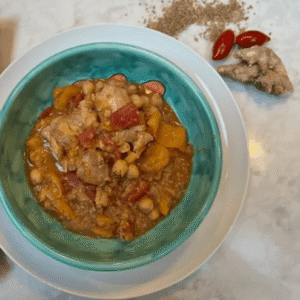 The apricot was first domesticated in Asia (some say China, though it is uncertain exactly where), and later turned up in many different heritage diets around the globe. Apricots are featured in a variety of traditional diets, including the Mediterranean, African, and Asian diets. North African tagines include apricots as one of their sweet elements to balance out the savory meats, nuts, vegetables, and spices that accompany them. In the Middle East, Amardine–a fruit leather made out of apricots dried in the sun–is consumed year-round, but is commonly enjoyed soaked in water to break fast during Ramadan. A poached apricot dessert from Turkey, Kuru Kayısı Tatlısı, is made by cooking apricots with a lemon syrup, then filling them with cream and nuts; it is enjoyed during religious holidays, represents balanced pleasure, and is a mark of pride for the Malatya area, known for producing some of the best apricots in the world. In Cyprus, okra stew is a simple and delicious combination of savory okra and tomatoes with sweet apricot. Dried apricot is also very versatile, lending a chewy texture and concentrated sweetness to Mediterranean grain bowls, curries, fruitcakes, stuffing and trail mixes.
The benefits of apricots extend beyond the culinary; they contain a plethora of vitamins, minerals, and antioxidants that support healthy eye, gut, liver and skin health. If you’d like to use more apricots like the many traditional diets do, you can start simple by adding them fresh or dried to oatmeal, granola, and salads; they will add a pleasant sweet-tart flavor to any dish.
Dates
The date palm was likely domesticated in modern-day Iraq around 4,000 BCE, and cultivated dates in North Africa seem to have appeared around 2,000 BCE. Dried dates were particularly useful for travelers at the time, because they kept well for years. They were also boiled down for date honey, and made into date wine.
 Dates continue to be especially prominent in Middle Eastern and North African cuisines. In addition to apricots, North African tagines also often feature dates as the sweet component to complement the savory, heartiness of the rest of the stew. Kleicha, Iraq’s national cookie, is made with various fillings, but date is the most popular. Dates stuffed with nuts, cheeses, and pastes are traditionally eaten to break the daily fast during Ramadan. Dates are even served alongside Morocco’s national drink, Moroccan mint tea (or ‘berber whiskey’).
There are many different varieties of dates. One of the most commonly found in the U.S. is the Medjool date: large, chewy and sticky, with a caramel-like flavor. Other similarly soft dates include Khadrawy, Halawy and Barhi, which have a sweet, creamy flesh because of their high moisture content. Semi-soft dates such as Deglet Noor and Zahidi are firm but chewy and have a lower moisture content. Dry dates such as the Thoory, also called the “bread date”, have relatively hard, dry skin and very little moisture, making them suitable to grind into flour or use in baking.
Dates not only offer heavenly taste–they also offer a wide range of health benefits! Has a doctor ever told you to eat more bananas for potassium? Just three small dates have more potassium than a medium banana. Dates are naturally very sweet and when soaked in hot water and blended, can be used to create a “date caramel” that is delicious stirred into oatmeal or mixed into baked goods. Just keep in mind that the suggested intake is 2-3 medium to large dates per serving, as they are very calorie-dense.
Mango
The mango originated in India, and it is believed that Buddhist monks brought mangoes to Southeast Asia around 4th century BCE. It’s imprint on life here was significant, earning nicknames early on such as, “the King of fruit”, or “Fruit of the Gods”, and still today it is connected to folklore and legends across many religions in South Asia. The Portuguese–the first to establish a mango trade–brought them to West Africa and Brazil, and the diet of the people of the Benin region expanded to include mangoes as well as other traded crops such as pineapples, tomatoes, peanuts, coconuts, sugar cane, papayas, sweet potatoes and oranges. In short, mangoes didn’t take long to become a staple of the West African diet.
 Nowadays, as one of the most popular fruits in the world, mangoes are featured in all sorts of dishes across many cultures. In India, the mango lassi is a popular, refreshing yogurt-based dessert drink. In Latin America, some modern-day variations on salsas include mangos, and mangos are often enjoyed simply sprinkled with lime juice and dusted with chili powder. They are traditionally included in Asian curries to balance rich spices with sweet and tangy flavors, like in this Coconut Fish Curry with Mango and Sugar Snap Peas. In West Africa, fresh fruit is enjoyed for dessert in an “after-chop” (fruit mixed with coconut, peanuts, and honey) and mango is a go-to option. In Mexican cuisine, dried mango mixed with savory spices is a popular spicy, sour, sweet snack. In Indian cooking, green (unripe) mango is dried and ground to make a tangy powder called amchur, and added into curries, marinades and chutneys. Dried mango is also savored around the world as a simple, nutrient-dense snack. Luckily, this tasty fruit is loaded with vitamins that help keep our immune system strong and our skin, eyes and heart healthy.
Whether eaten at breakfast, lunch, or for dessert, there is no wrong way to enjoy stone fruits, as many heritage diets show us. Refreshing, full of bright flavor, and packed with nutrition, they have been cultivated and enjoyed for thousands of years for good reason.



Leave a comment