


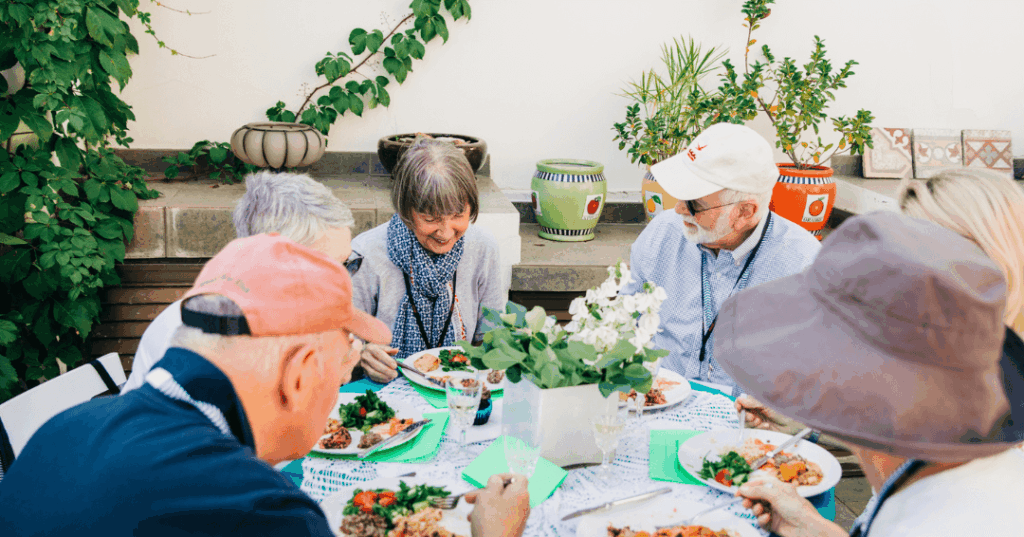
At Oldways, we believe food is one of the greatest gifts of heritage – carrying with it the wisdom, customs and authentic flavors of our ancestors.
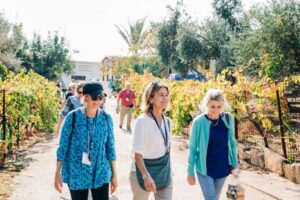 One of our favorite ways to live out our mission of inspiring people to embrace the healthy, sustainable joys of the “old ways” of eating is by going straight to the source through educational group culinary travel. Not only do our culinarias allow us to enjoy the special flavors of a given region, but they provide us with the chance to learn from those who keep local food traditions going. We find that culinarias linger long after the trip ends because we are able to bring the tastes, traditions and treasured memories of the “old ways” home with us.
Listed are just a few of the wonderful places we’ve been lucky enough to experience, and some of the dishes we brought back with us:
Puglia
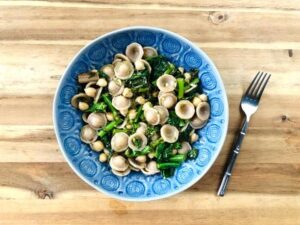 We’ve been to Puglia many times and are going again this November! It’s a place known for its olive oil, wine, burrata, and especially for its signature ear-shaped pasta, orecchiette. In fact, one of our favorite dishes during our past visits was this Orecchiette con Cime di Rape (broccoli rabe) – a savory combination of hearty pasta, fresh produce, anchovy filets and plenty of olive oil.
Cyprus and Crete
Being in Greece always means it’s Tzatziki time! We have had the pleasure of enjoying this dish with meals on many of our culinarias, in Cyprus, Crete, Turkey and beyond. A cool and refreshing mix of cucumbers and yogurt, this Greek sauce is a Mediterranean staple for good reason, versatile and delicious atop so many different dishes.
Thessaloniki and Athens
 While we also enjoyed tzatziki here, another dip that stuck with us after traveling to Thessaloniki and Athens was a traditional spread called Skordalia. This classic Greek dip is made with ingredients like capers, mixed almonds and walnuts, and starches like potatoes and bread. It’s perfect as a spread, with mezes (small dish-appetizers), or as an accompaniment to a fish or meat main course.
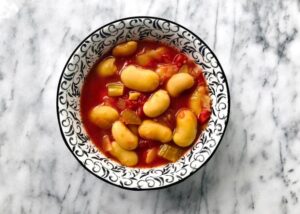
Another food specific to the region were these oversized Gigante Beans – literally “giant beans.” Slow-cooked with onions, garlic, celery and tomatoes, they have a wonderful bite and meaty flavor.
Spain
We’ve hosted culinarias throughout Spain – to Madrid, San Sebastián, Granada and Sevilla – and always come away with new dishes we’re itching to recreate ourselves.
A particularly crave-worthy one is also one of the most popular dishes in Spain: the Tortilla Española, or Spanish Potato Omelet. There are many variations, but the most common version features potatoes and onions. It’s a perfect lunch and a staple of tapas bars throughout Spain.
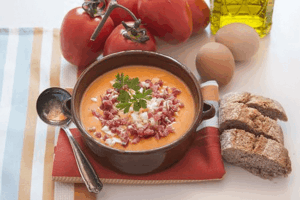 For hotter days, nothing hits the spot like Salmorejo Cordobes. This cold tomato soup is more filling than gazpacho because of the added bread, and it’s extremely tasty thanks to extra virgin olive oil, vinegar, garlic and seasonings. Andalusian agricultural laborers made this soup when they worked in vegetable gardens, where all of the ingredients were readily available to them.
And we still reflect fondly on this Tarta de Santiago – a Spanish almond cake. This dessert is found in bakeries in Santiago de Compostela, Spain, the destination at the end of the Camino de Santiago pilgrimage. With notes of citrus and a rich almond flavor, it pairs well with fresh fruit.
Veneto
Known especially for its capital city, Venice, Veneto is a region in northeastern Italy that is home to so many delicious foods.
Risi e Bisi – or “rice and peas” – is the perfect comfort dish and is especially delicious in the spring, when using seasonal produce. With warming broth, fresh peas and plenty of Parmigiano Reggiano, it hits the spot every time.
Naples and Amalfi
 We were lucky enough to travel here in 2022 with Chef Michael Lombardi of Si Cara Restaurant in Cambridge, Massachusetts. While there, he shared his pizza recipe with us, and it’s now our staple pizza dough recipe:
Chef Michael Lombardi’s Pizza:
Ingredients:
- 650 grams (2¾ cups) water
- 10 grams (¾ tablespoon) active dry yeast
- 1000 grams (8 cups) 00 flour
- 30 grams (1¾ tablespoons) salt
Instructions
- Mix the water with the yeast. Add in the flour and mix it together until you have a loosely formed dough.
- Add in the salt and then knead the dough by hand for 5 to 10 minutes until it is smooth and elastic.
- Place the dough in a bowl and cover the bowl with a towel or piece of plastic wrap.
- Allow the dough to nearly double in size, about 2 to 3 hours depending on the temperature.
- Divide the dough into 250-gram (½ pound) dough balls. Roll them around in your hand until you have smooth balls with no seams. Place them on a tray and cover them.
- Allow the dough balls to proof until they are almost double in size.
- Shape the dough balls into rounds, put on your favorite toppings, and bake on a pizza stone in an oven set to 500°F for 5 to 10 minutes, until crust is golden brown.
Sicily
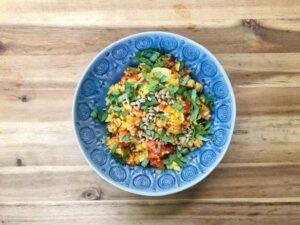 We traveled to Sicily many times – and we’re returning again in September 2026 – which brings this Italian region’s fresh flavors to the fronts of our minds.
One combination we can never get enough of is couscous with bright Mediterranean flavors, as in this salad. It’s bright and citrusy, full of flavor from fresh basil and vegetables, and soaked in an orange and lemon dressing.
Pantelleria
 When we travelled in 2012 to this Italian island that is part of the region of Sicily, we were swept away by its food, just like the wind that sweeps the island. Dishes like Caponata – a traditional Sicilian dish featuring eggplant, tomato sauce, onion, and celery – and Ciaki Ciuka – a delicious medley of vegetables simmered in olive oil – put the region’s produce and delicious olive oil on full display, serving as amazing accompaniments to seafood dinners like swordfish steaks topped with tomatoes, olives and the capers that Pantelleria is famous for.
Turkey
Traveling to Turkey is always a treat, especially alongside Chef Ana Sortun of Oleana restaurant and Sofra Bakery in Cambridge, Massachusetts.
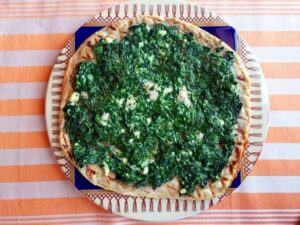 One of our favorite cooking demonstrations from Chef Ana was this Spinach Lamejun. The thin dough is traditionally topped with minced meat and minced vegetables, but we loved Chef Ana’s spin on it, featuring spinach, halloumi and labneh.
Another favorite from a Chef Ana cooking demonstration is what Ana calls Ayfer’s Kisir. This simple and delicious recipe for kisir, a traditional bulgur recipe, was created by Turkish food writer Ayfer Unsal and adapted by Chef Ana for the 2012 Oldways Culinary tour in Gaziantep and Istanbul. Ana first tasted this kisir when Ayfer organized a potluck lunch for Ana’s first visit to Turkey, and we’ve all been crazy about it since.
Culinary travel is a true gift – one that we hope you’ll join us in enjoying. Getting to view cooking around the world as a method of connection with others and to one’s heritage is always a special experience.
However, travel is not a prerequisite to fully enjoying the old ways of eating, and we have resources, recipes, classes and more to help you on your journey. We hope you’ll take these recipes as a starting point to embrace cultural food traditions and bring the best elements of traditional diets forward into your own homes and communities.
Leave a comment