

Waste not want not is more relevant than ever these days, with grocery prices rising and the estimated food waste in the United States between 30-40% of the food supply. Did you know heritage diets encourage minimal waste by focusing on using ingredients to their fullest? In the Mediterranean diet, recipes use vegetables from root-to-leaf, while also cooking with things like dried-out bread to prepare soups like Tuscan pappa al pomodoro. Many Asian cultures utilize leftover vegetables and day-old rice or noodles in a stir fry, while in Latin America stale corn tortillas mixed with salsa form Mexican chilaquiles. These ingredient-stretching techniques are a foundation in heritage diets and have allowed people from all over the world to feed their families delicious, nutritious meals on a budget.
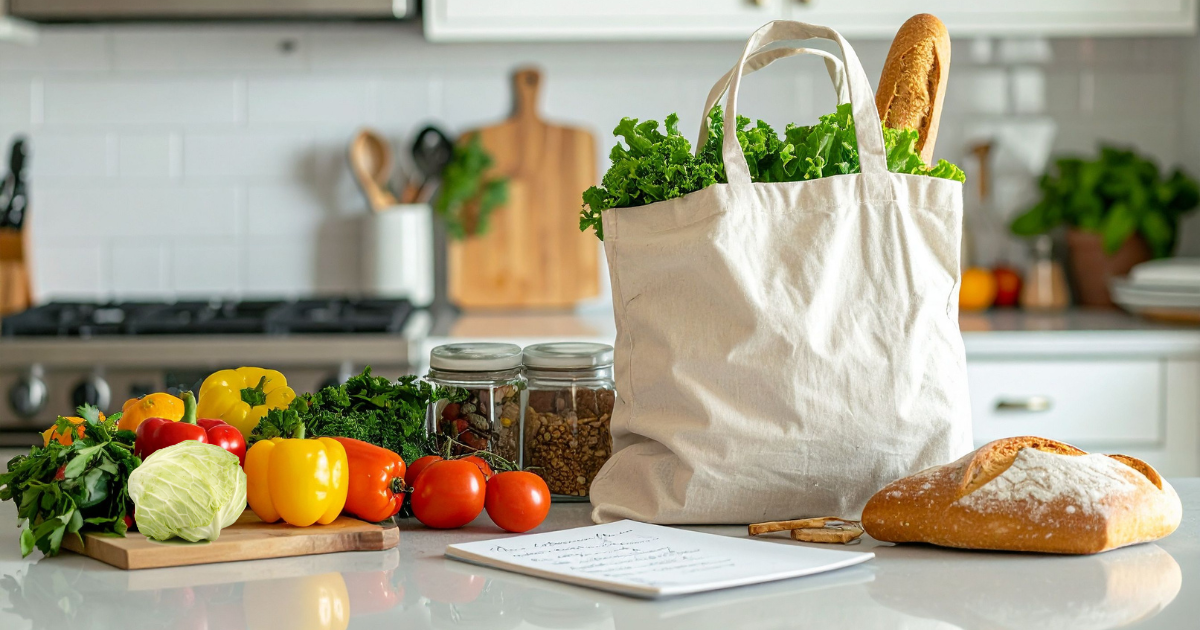
Nowadays, many of us find ourselves buying large amounts of ingredients for a single recipe and with no idea of what to make with the leftovers. To show how fun, flavorful and wallet-friendly heritage diets can be, we’ve put together a five-day menu featuring heritage diet recipes from around the world. Using the wisdom of traditional diets, these recipes show how a few affordable ingredients (whole grain bread, canned beans, and cabbage) can be remixed into fresh meals day after day.
Monday
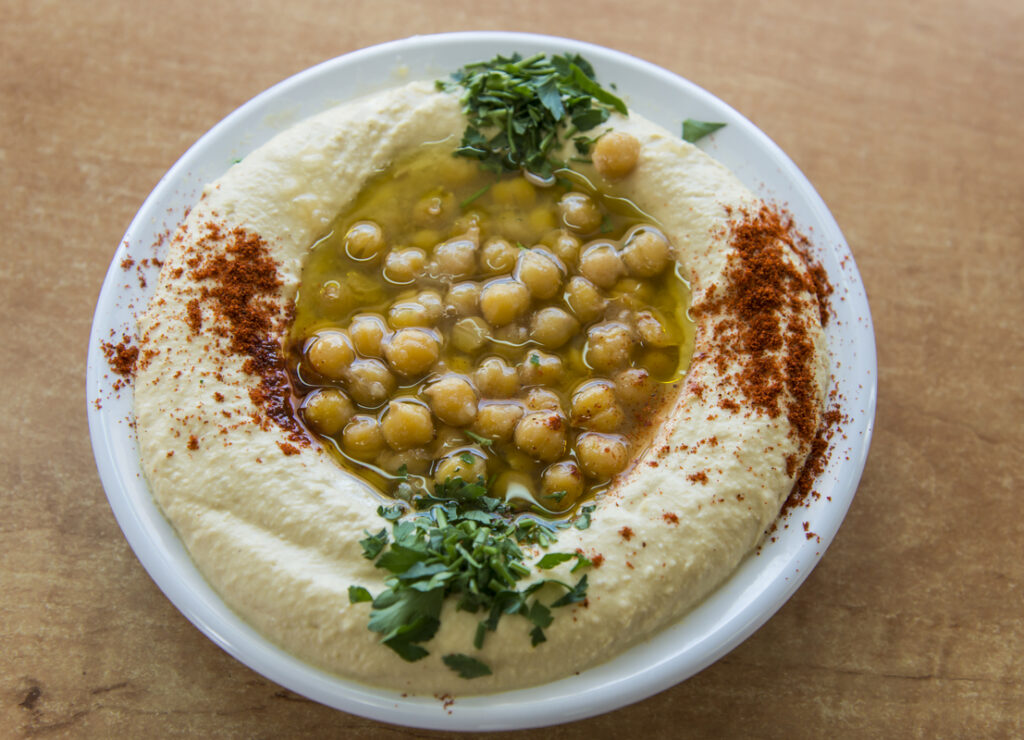
Lunch: Hummus meze plate
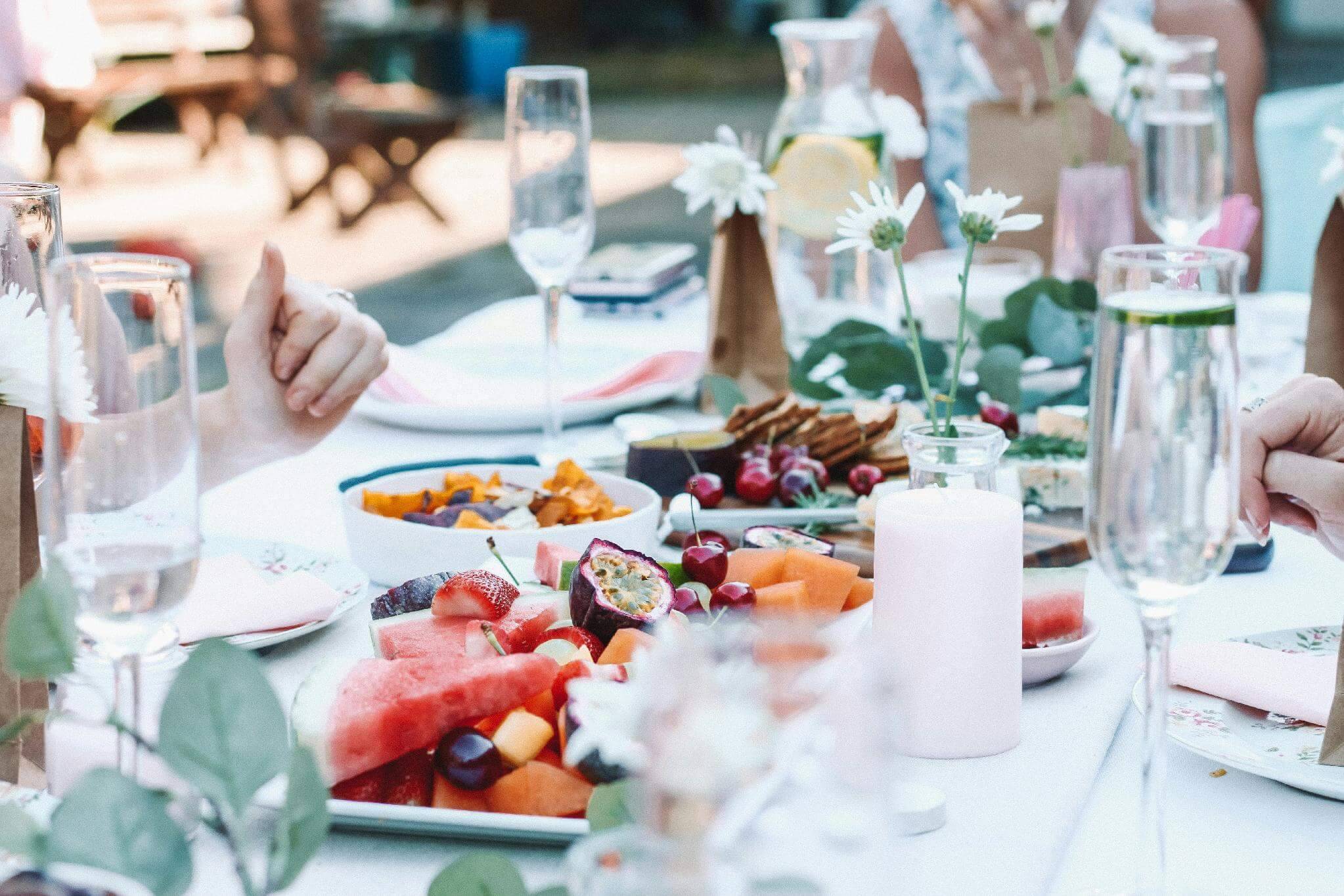
Mezze plates are Mediterranean-inspired charcuterie boards that allow for a snacking lunch and can be prepared with your preferred ingredients. Build your own mezze plate with a scoop of hummus or bean-based spread, a handful of crunchy, raw vegetable (carrots, cucumbers, bell peppers, celery), a handful fruits, cut into bite-sized pieces (melon, berries, grapes), toasted whole grain bread, and an ounce of traditional cheese.
-Whole grain bread
-Beans
Dinner: Pasta with cabbage and mushrooms
This dinner is quick and easy to prepare with your favorite shape of whole grain pasta and a portion of chicken or salmon for added protein. If you don’t have mushrooms or simply want to add more color to this dish, peppers, onions and squash would make good additions to this recipe. You can also use any leftover vegetables from your mezze plate!
-Cabbage
Tuesday
Lunch: Oldways Ethiopian Cabbage
This dish adds vegetables and spice to your afternoon meal. Traditionally enjoyed with injera (Ethiopian flatbread) this recipe can also be enjoyed with a slice of whole grain bread. This recipe is a great way to use the leftover cabbage in your fridge, from Monday night’s dinner.
-Cabbage
Dinner: Ghanian Red Red (Bean Stew)
Black-eyed peas are a Ghanian staple protein, and are often cooked as a stew with smoked fish. This plant-based version can be adapted with another type of bean, but we encourage you to try it with black-eyed peas to experience this African heritage meal!
-Canned beans
Wednesday
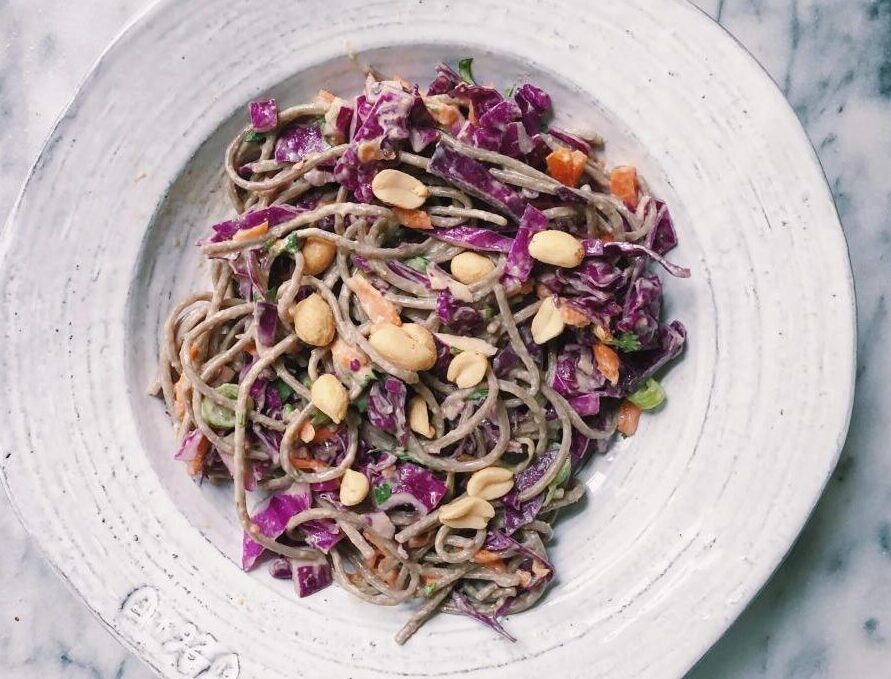
Lunch: Soba and Cabbage Salad with Peanut and Miso Dressing
Soba are Japanese noodles traditionally made from buckwheat flour. The key to keeping the texture chewy and springy is to give them a rinse in cold water after cooking to avoid getting a mushy and gummy noodle. This recipe can be served chilled, making them a great work or school lunch or picnic dish since they don’t need to be reheated.
-Cabbage
Dinner: Chana Masala
Chana (also known as chickpeas) are beloved in Indian cuisine. This recipe is beautifully seasoned and will have you adding chickpeas to your weekly shopping list for more. Chana masala is traditionally eaten with flatbreads, and can be enjoyed with a slice of whole grain bread and plain yogurt.
-Canned beans
-Whole grain bread
Thursday
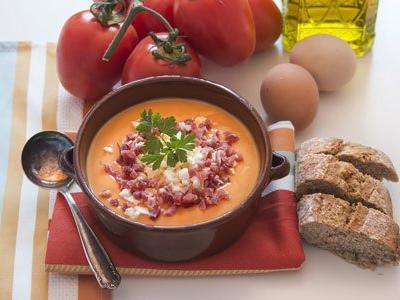 Lunch: Salmorejo Cordobes (Cold Tomato Soup)
Salmorejo is a cold tomato soup thickened with bread, and enhanced by seasonings and extra virgin olive oil, making it heartier and more filling than its cousin, gazpacho. This recipe is a great way to use bread that is about to go bad or too hard to make into a sandwich. The recipe calls for ham or sausage, but it can be removed to make it vegetarian.
-Whole grain bread
Dinner: Beans and Greens Bowl
Beans and greens are a staple of traditional diets around the globe, and this quick and easy dish can be enjoyed as-is or topped with shrimp,fish, or an egg for a protein boost. If you have a favorite salsa or hot sauce, feel free to add some at the end.
-Canned beans
Friday
Lunch: Fattoush
Fattoush is a classic bread salad from Lebanon and makes use of leftover pita from serving chana masala by mixing it with greens and vegetables. Sub the pita for slices of whole grain bread, making sure to cut the bread into bitesized pieces before toasting to allow it to mix well into the salad. If using a crunchier green like kale or cabbage, make sure to ‘massage’ the greens to evenly distribute the dressing.
Dinner: Wild Veggie Tostadas
Tostada is a Spanish word meaning “toasted”. In Mexico and other parts of Latin America, it is the name of different local dishes that are toasted. This recipe marries flavor with color and combines Poblano peppers with kale, purple cabbage and avocado. If spicy isn’t for you, bell peppers work well here too. Try adding any other leftover veggies from your fridge for this Friday dinner.
We hope these recipes inspire you to try incorporating heritage eating at home. With a few tips and tricks from traditional diets around the world, no ingredient will get left behind.
 millie snyder