


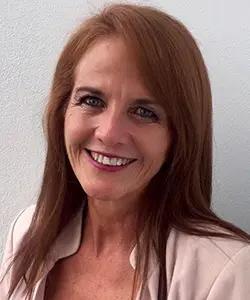
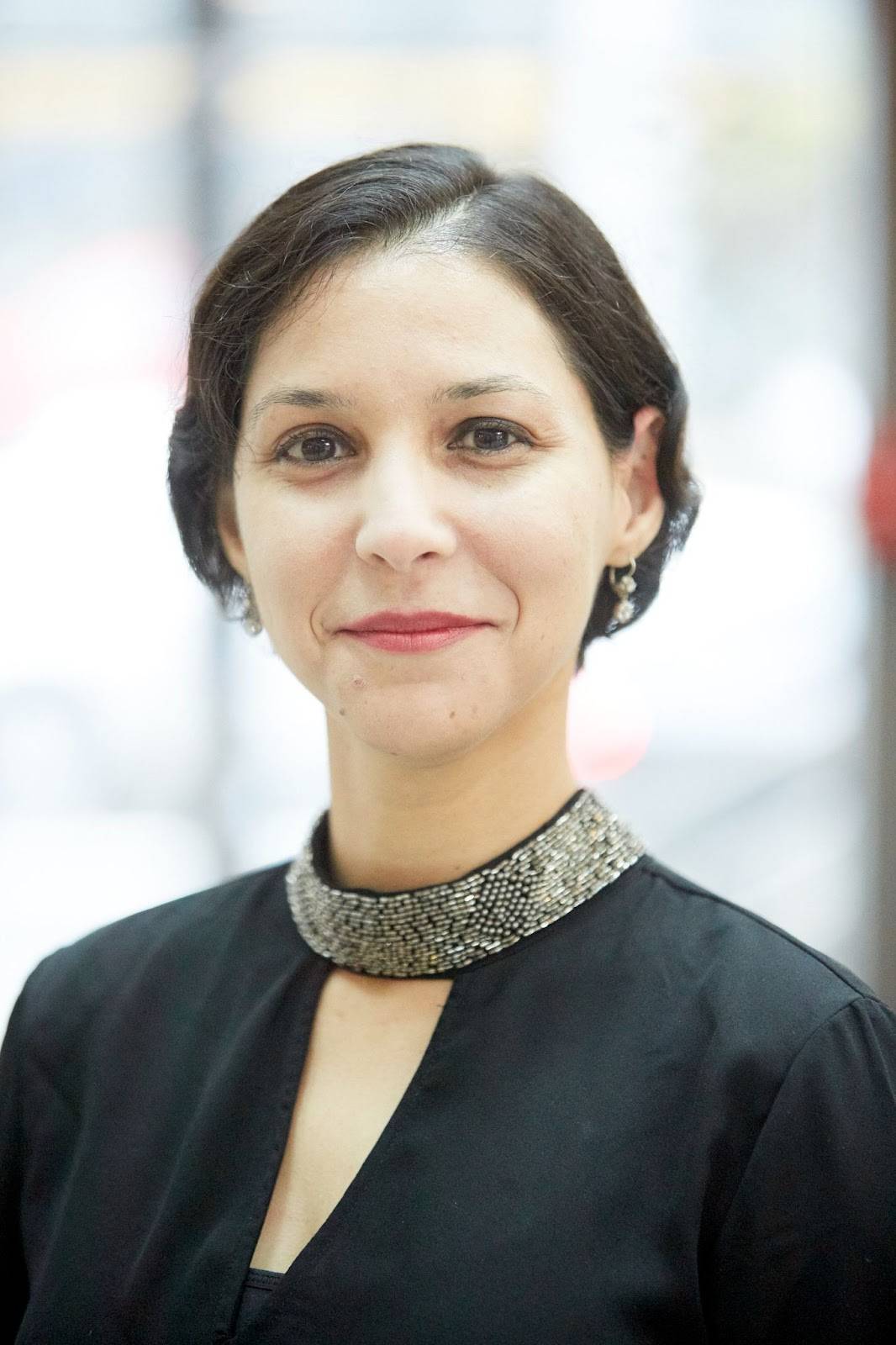
 Introduction: Dr. Hannia Campos is a renowned nutrition scientist and educator, and a proud native of Costa Rica. With a PhD in Nutrition from Tufts University and over 25 years of experience, she served as a faculty member at the Harvard T.H. Chan School of Public Health, where she founded the Nutrition Biomarker Laboratory. Dr. Campos led pioneering research on dietary fats and non-communicable disease prevention, and has also explored the nutritional benefits of traditional foods like beans. She is currently the Principal Investigator of the Costa Rica Heart Study and a member of the National Academy of Sciences of Costa Rica. As an Oldways Latin American Heritage advisory board member, Dr. Campos bridges cultural food traditions with cutting-edge science to help people eat well. In celebration of Hispanic Heritage Month, we spoke with Dr. Campos about her heritage, research, and practical tips for healthy eating.
Q: Could you tell us a little about yourself and how you first became interested in food and nutrition?
A: “Since I was in high school, I was always very curious about diet. But my real interest started when I was in college. I went to Mount Holyoke and I was a biology major… I was interested in nutrition, but for plants, because my major was in plant physiology, and all my research in college was on how to give nutrients to plants. They invited this nutritionist to give a lecture and she made us do this – it was like a 24-hour recall – and told us about diet… I got very interested, like, ‘Oh my God, nutrition in humans probably does the same thing if you make these dietary changes,’ So that was what sparked my interest… My college didn’t have nutrition, but UMass Amherst had a course in nutrition, so I took a course outside of my college, and that’s how it all started.”
 Q: Could you share how growing up in Costa Rica influenced your relationship with food and nutrition?
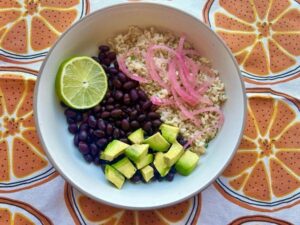
A: “Costa Ricans – and same in my house – we grew up [where] our main meal was always rice and beans. We didn’t have soda; it was milk. My mother had a dairy farm with my uncle, so we got fresh milk and cheese every day. We really learned to love beans, and I still do – I love the fact that they’re so nutritious.”
Q: What ingredient reminds you most of your heritage?
A: “I always go back to cilantro… When they were cooking the fresh beans and at the end you’d add the cilantro, you’d get that smell. When I first moved to the U.S. in 1982, cilantro didn’t exist (in many average stores). I found out somebody once told me that in Chinatown they had cilantro, and I would go to Chinatown every Saturday just to buy cilantro because it felt like home.”
Q: Could you tell us about your family’s favorite food memories?
A: “My mother didn’t cook, so our food wasn’t very memorable or delicious. My grandmother is the one that used to make the desserts. And I remember the whole family would participate in making tamales at Christmas – it was a big tradition and so delicious.”
Q: What healthy tips do you have for enjoying Latin American heritage foods on a budget?
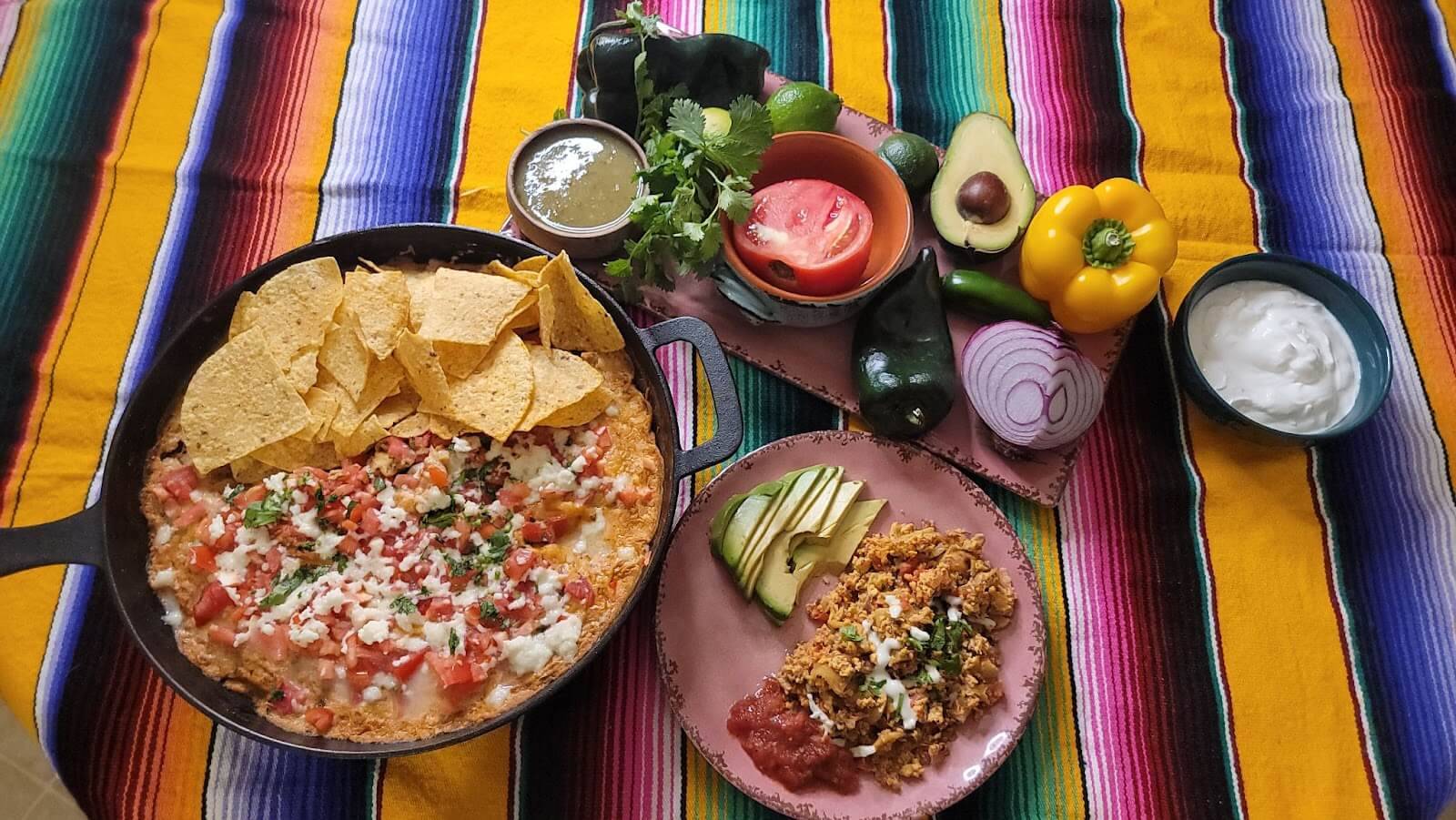
A: “One really nice thing is you can make food taste really good with very few things. For example, in Latin America, if you like cilantro, you add lime juice and a little bit of salt and pepper, and you can add hot chilies and onion. It’s very easy to make the flavors come out. We have this dish called olla de carne that you can make with chicken or with beef. You put in all the starchy vegetables – potato, plantain, chayote, corn – then celery and spices, and you boil it with a bit of beef (you don’t even need the beef, it’s just for flavor). It’s so good and really easy. You can put it in a slow cooker for three or four hours and it comes out dense, delicious and healthy. I also make a quick fresh salsa all the time: chopped tomatoes with a little lime juice, onion, and cilantro. You put that on your beans, on your rice, on a tortilla or an empanada…add some hot peppers and it’s delicious.”
 Q: How do you balance cultural traditions with modern health recommendations in your work?
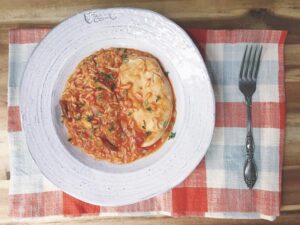
A: “It can be frustrating because there is this misinformation that rice and beans are bad. People say, ‘Oh, I’m going on a healthy diet – I’m not going to eat any more rice and beans.’ And I’m like the number one defender, because it’s not true! I’ve always felt the important part in a field like nutrition is to bring the science to the people, so that you can have a real impact on what people end up eating.”
Q: Your work often challenges mainstream narratives in nutrition. What’s your approach to exploring controversial topics (like debates over certain oils or diet fads)?
A: “You know, there’s this whole trend of ‘seed oils are bad.’ Where do they invent these trends? I mean, first it was the whole gluten trend, and now it’s seed oils. It’s just a matter of spreading the word and telling people, don’t follow [all that]. I try to stick with evidence and challenge those myths whenever I can.”
 Q: What are your plans for Hispanic Heritage Month?
A: “No (we don’t really celebrate that in Costa Rica)…we celebrate being Hispanic all year!”
Closing: Dr. Campos is retired and continues to devote herself to research and advocacy that honor both science and heritage. She leads the ongoing Costa Rica Heart Study and remains active in global nutrition projects, all while enjoying life back in Costa Rica. Looking ahead, Dr. Campos hopes to keep bridging scientific evidence with traditional ways of eating – empowering others to maintain healthy heritage diets in modern life. As she puts it, bringing sound nutrition science to the people is the key to making a real impact, and she aspires to inspire many more to celebrate their culture and their health, during Hispanic Heritage Month and beyond.
Leave a comment