

 This Hispanic Heritage Month, Oldways is thrilled to spotlight one of our Latin American Heritage Advisory Board members, Professor Steven Alvarez from St. John’s University in Queens, NY. In addition to his academic work, Steven has found a creative way to bring heritage foodways into the classroom. As part of his syllabus, students are preparing dishes from the Oldways Latin American Heritage Program recipes collection, researching their historical roots, and sharing their cooking narratives on Instagram. Through this assignment, Steven is showing how food can be a powerful entry point into history, identity, and community.
What inspired you to include this Oldways Latin American Heritage recipe project in your syllabus for Hispanic Heritage Month?
My involvement with the Oldways Latin American Heritage Program recipes was the first inspiration, as when first exposed I began to imagine how I might incorporate more cooking in my Taco Literacy course. In that regard, the pedagogical inspiration has been to find different ways for students to appreciate foodways and learning, to get “hands-on” with foodways as it were, while also practicing some of the critical approaches to foodways we’ve studied in class. In Taco Literacy this semester, students signed up for a recipe from the Oldways Latin American Heritage recipe collection to prepare at home, which they documented and then presented as a PowerPoint for the class, as well as some research into the ingredients and history of the dish. The presentations happen over the duration of the semester, so for some days in class, we begin with a student offering a recipe presentation. Of course, many of the recipes are not from Mexico, but students are free to choose any to their liking for this assignment.
How do you see food and cooking as tools for teaching history in your classroom?
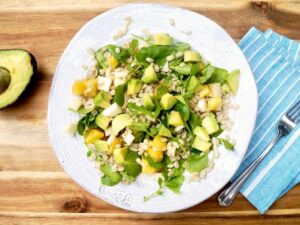 Without doubt, having the proper kitchen-classroom to cook would be ideal, but for this reason, I asked students to do some of this work at home, while still presenting their cooking in class via Instagram and their class presentations and assignments. We did make escabeche in class, as that was relatively easy to do in a “regular” classroom. Doing this activity in class was a way to model a bit about researching history of the dish, ingredients, migrations, and preparation differences. All this goes to say, when studying the dish, as well as the etymologies of ingredients, we’re given insight into the context of the foodways, and when cooking, when holding the foods in question, the learning is that much more significant. And, finally, when students make something, whether that’s a poem, a song, a play, or a salsa, there’s meaningful learning there.
What excites you most about students preparing these dishes and sharing their experiences on Instagram?
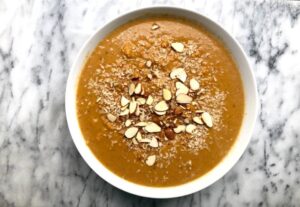 The students have been proud to share what they’ve made, as well as critical connections they are making between what we are studying and what I think they already intuit about foodways and learning. The students also use Instagram to share what they’re learning from what we’re studying, and I’m always impressed with what they take away from our readings and the critical questions they pose in their posts. Using Instagram connects students with one another outside of class, but also with the different authors, chefs, journalists, publications, academics, and influencers we follow in class. I also like to share what students are working on via @tacoliteracy as the public face of the course and this teaching about Mexican foodways I’ve been doing for close to ten years now.
How have your students responded to the assignment so far? Any memorable moments or surprises?
Thus far, the students have responded well to the cooking assignment, as well as the in-class cooking. With the student presentations from the Oldways Latin American Heritage Program recipes, what probably both surprised and impressed me was how the students offered some critiques of the recipes, for example, making substitutions. One student made a smart suggestion about using baked tortilla chips instead of crackers for one of the recipes, as, she noted, the corn would be truer to Latin American foodways. That was a smart observation, and one I had to agree with. When it comes to foodways, students always impress me with their research, writing, and, now, their cooking.
What do you hope your students take away from connecting with traditional recipes in this way?
I encourage students to recruit some help for the assignment. My hope is that students enjoy a cooking project with family members or friends, while also chatting about the Oldways Latin American Heritage Program recipes, what they are learning in class, and the research they have done into what they are preparing. When students give their presentations to the class, I always ask who was there with them, that is, who was with them sharing in the cooking and eating. The conversations students have with family members about different foods has been fun to hear about, as well as what those they share their meal with have to say about college classes about Mexican food and what they are learning in class. No doubt, this is where Instagram comes in handy so they can also show them more.
How do Oldways’ resources (like the A Taste of Latin American Heritage curriculum ) support your teaching and bring history to life for students?
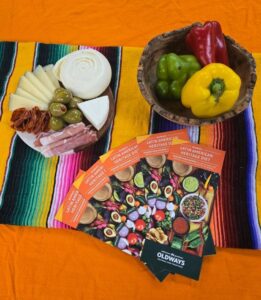 The Taste of Latin American Heritage curriculum has been influential in how I began to think more about health, nutrition, heritage, and cooking as pertaining to teaching, and I recommend any instructor at any level to peruse more about it. Having taught Taco Literacy for close to a decade now, I think my pedagogy had been on a similar wavelength, but it took Oldways for me to make the transition to combining my approach for literacy learning and foodways to cooking. The Taco Literacy students practicing recipes for class are learning and sharing their learning in different ways, but which have relevance for them, especially when it comes to feeding themselves, and with healthy alternatives. For college students, posing such assignments are useful and hopefully students who may not have much cooking experience find something enjoyable in the experience, even if they recruit a family member or friend to help.
In your view, why is it important to preserve and celebrate Latin American food traditions in both academic and community spaces?
Latin American food traditions are celebrated in our communities, and we can see that in our everyday lives, in the restaurants we love, the foods at the grocery store we can’t live without, and the flavors that make us feel comfortable. The Latin American influences on US cuisine and culture have been profound historically, and likewise the US influences on Latin America’s cuisines and cultures cannot be overstated. In the US context, this hemispheric connection we with Latin America via foodways offers a view into shared histories. For academics, the food traditions deserve study as another layer of context for students to appreciate culture and human ingenuity, in this case, with emphasis on the Americas, though one could imagine doing such research in different regions of the globe or comparing regions. In my view, community spaces are the backbone preserving and celebrating Latin American food traditions in innumerable ways already and the best any of us can do is support them in the work they do, which ultimately furthers the dignity of communities.
 Do you see yourself continuing or expanding this type of food to heritage assignment in future semesters?
For sure, and hopefully as I teach foodways classes that are more general, students can open their recipe to different heritage cookbooks, especially those that may relate to their cultural backgrounds. I think I’ll also try to incorporate a final project in the future where students produce a short foodways memoir with a few recipes from their own repertoires, which could draw from their family, or a few recipes they have developed on their own.
What advice would you give to other educators who may want to weave heritage foodways into their own teaching?
The advice I give to any instructor, in general, is to experiment with your approaches. I say this but also with the warning that not all experiments succeed, and that failure is part of the process. However, when you find what works, use that to continue with and build from, to learn from. I would also encourage, in the ways of incorporating heritage foodways into your pedagogy, to think about ways students can do cooking as homework projects, but then make photo-essays, video projects, class presentations, podcasts, and more. If we cannot all have kitchen-classrooms, then we must ask students to do some kitchen work elsewhere, but to bring that back into the classroom. I reasoned a PowerPoint would be the easiest way to do this at this time, but I may try a different approach in the future, perhaps a short “documentary” style video.
Finally, what’s one of your favorite Oldways Latin American Heritage recipe you personally enjoy or would love to try this semester yourself?
 I love the healthy options from the recipes, as well as some of the “quick and easy” and the “staff favorite” selections. One I just tried, which was also a “staff favorite” was the Aztec Amaranth Cocoa Porridge, which I think will be perfect for winter. Preparing this, I was telling myself I don’t have enough amaranth in my life, it’s an ancient grain and super healthy. When I have a little more time, I intend to try the calabaza in pipián rojo, that looks amazing.
We are grateful for Steven’s leadership and creativity in helping students connect with Latin American heritage through food. His approach highlights how recipes are more than instructions, they are living archives of identity. By bringing Oldways resources into the classroom, Steven is fostering meaningful discussions and inspiring the next generation to celebrate and preserve their unique foodways.
 Donna
Donna