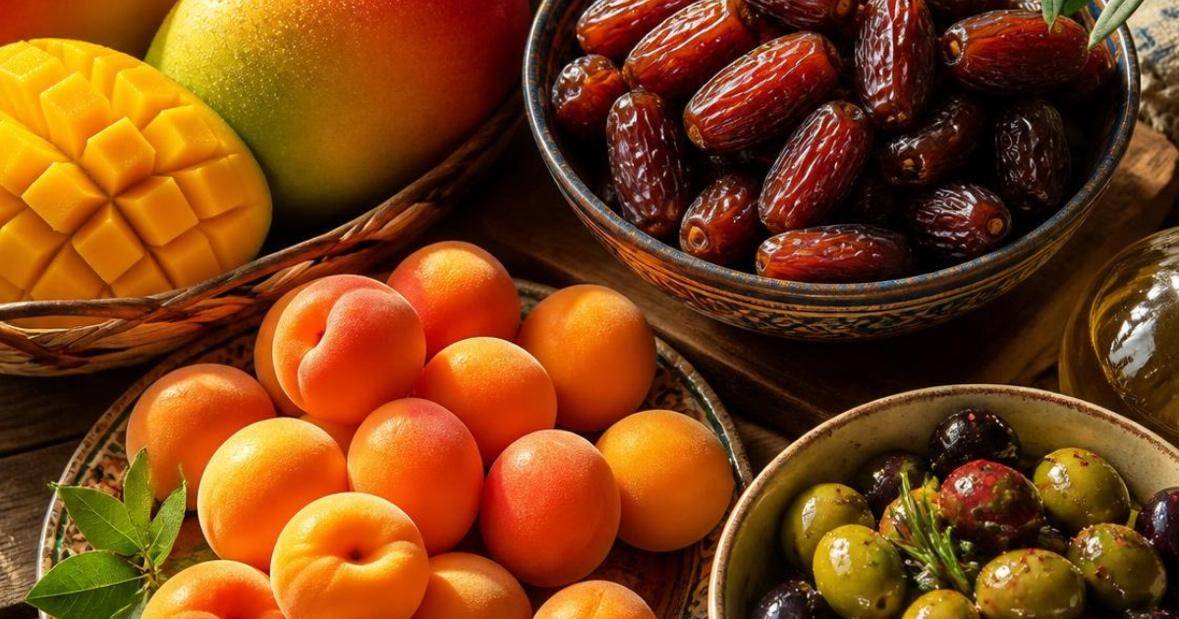


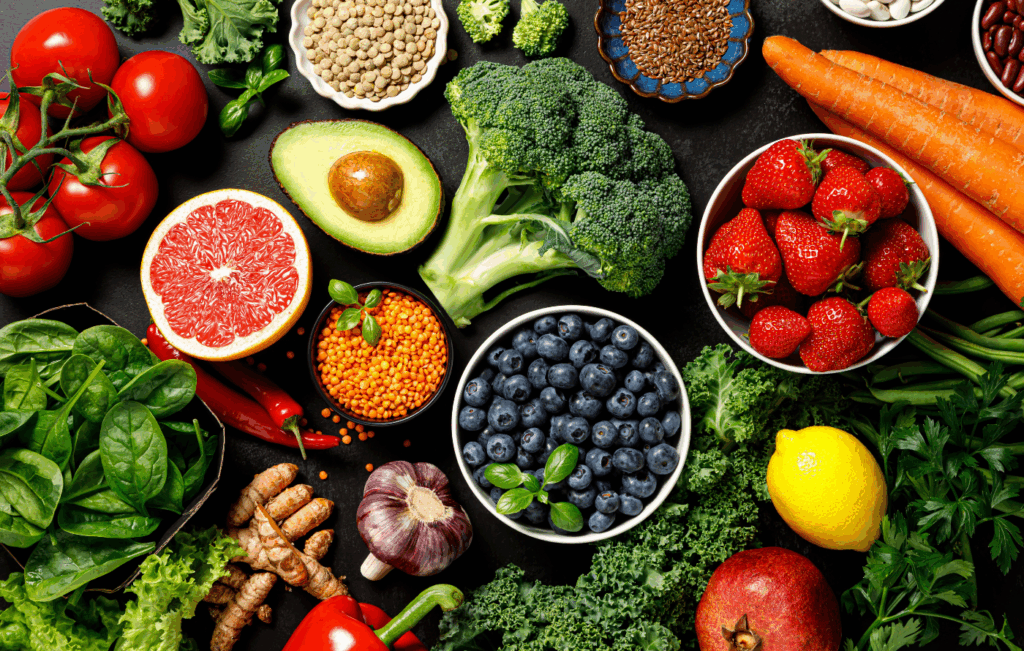
Over the years, the Dietary Guidelines for Americans (DGA) have recognized the strong and consistent evidence supporting a diet based on whole grains, fruits, vegetables, beans, seafood, nuts, seeds, and lean proteins with healthy oils like olive oil, and limited in added sugars, salt, and animal fats.
Evidence-Based Recommendations in the 2025-2030 DGA
The 2025-2030 Dietary Guidelines were released on January 7, 2026 along with a new, inverted food pyramid. While there are differences from previous editions, the 2025-2030 DGA do carry forth many commonsense recommendations shared in previous iterations of the guidelines and agreed upon by nutrition experts.
Fruits (2 servings per day), vegetables (3 servings per day), and whole grains (2-4 servings per day) are some of the key building blocks of the new food pyramid. The guidelines also recommend limiting added sugars, sodium, and refined carbohydrates, and keeping saturated fat to less than 10% of calories. All of these recommendations should be familiar to those keeping up with nutrition guidance, as they are the core underpinnings of many of the healthiest diets.
The 2025-2030 DGA beautifully succeed in capturing discontent with the standard American diet and recognition that a return to the healthier habits of generations past could improve health. When attempting to define what that healthier ancestral diet might be however, is where the rhetoric surrounding these guidelines diverges from the guidelines themselves, opening the door to confusion and contradiction.
Areas Where More Clarity is Needed
Contradictory Guidance on Healthy Fats: The saturated fat guidelines proposed are the exact same they’ve been in years past, recommending limiting saturated fat intake to 10% of calories or less. However, the food recommendations around saturated fat make it difficult to hit the 10% figure. If someone on a typical 2,000 calorie diet were to consume 3 cups of whole milk, as recommended in the new DGA, they would have already met 75% of their daily saturated fat intake, and even a modest 3-ounce steak would put them over the limit. The vision of a protein-centric diet with eggs and meats and dairy is not actually in compliance with the saturated fat limits of the 2025-2030 DGA.
Focus on Processing Sends Mixed Messages on Whole Grains: The overarching message of the 2025-2030 DGA is to eat real food. While this sounds very positive, it is also true that highly processed foods are demonized throughout the guidelines. Given that processing is not an appropriate or accurate measure of nutrition quality, nor does it necessarily reduce the nutritional aspects of a product, the blanket recommendation to avoid processed foods is misleading and ultimately unhelpful for improving public health.
This administration has previously noted that, “foods considered to be ultraprocessed may also include foods such as whole grain products or yogurt, which are known to have beneficial effects on health and are recommended as part of healthy dietary patterns.”
It is important to recognize that, unlike fruits and vegetables, grains cannot be harvested from the field and eaten as is—they must undergo processing to become an ingredient that is safe, edible, convenient, accessible, and tasty to eat.
Processing is particularly important for whole grains and often improves their nutrient bioavailability. And while more minimally processed whole grain options exist (like rolled oats, and brown rice), nearly all the top sources of whole grain in the American diet—breads, rolls, tortillas, and ready-to-eat cereals—are considered highly processed. If Americans are told to reject highly processed foods altogether, whole grain intake may fall even further, bringing Americans further out of line with national whole grain recommendations and increasing the risk of chronic disease.
Protein and Food Groups: While a Pyramid graphic can be a useful tool for depicting foods over time, the positions of foods on the new food pyramid don’t relate to their recommended consumption level, making it difficult for Americans to visualize a well-balanced diet. The protein category is particularly confusing.
Most Americans are not deficient in protein. Although athletes, seniors, and pregnant and lactating women tend to have increased protein needs compared with the general adult population, most Americans are already getting more than enough protein. Nearly 70% of the U.S. population exceeded the longstanding recommendation for meat, poultry, and eggs, according to the previous edition to the guidelines. The 2025-2030 DGA’s emphasis on increasing protein above all else is not reflective of current research.
Additionally, the 2025-2030’s emphasis on animal-based protein sources is not in line with the current evidence on reducing risk of chronic disease. People who get more of their protein from plant-based sources are significantly less likely to die from heart disease than those who get more of their protein from meat. Further, the American Institute for Cancer Research warns that there is strong evidence that eating high amounts of red meat increases the risk of colorectal cancer. Given the startling increase in colorectal cancer diagnoses in young adults, this relationship should not be taken lightly.
Impact of the New 2025-2030 DGA
Science is an evolving process, and we’re always learning something new. But the reality is that most of our problems aren’t caused by the poor nutrition advice of past DGA – they’re caused by the fact that most Americans didn’t follow the nutrition advice in the DGA to begin with given the immense structural barriers in place (income inequality, food access, poor cooking skills, nutrition disinformation, and so on). Nonetheless, the DGA are important because they shape federal programs such as the National School Lunch Program.
How to Find Reputable Nutrition Advice
There is perhaps more consensus than ever in the scientific community, that a diet based on whole grains, legumes, vegetables, fruits, olive oil, nuts, seeds, seafood, and lean proteins, and limited in added salt, sugar, and animal fat is optimal for health. We invite you to explore the abundance of evidence-based healthy eating recommendations from credentialed nutrition experts rather than keep track of which recommendations in the 2025-2030 DGA might be a step forward and which are a step back
One such example of a consensus-driven, evidence-based healthy diet is the EAT-Lancet Diet, also known as the Planetary Health Diet. This eating pattern was created by an expert commission of dozens of the world’s leading nutrition researchers including Dr. Walter Willett of the Harvard T.H. Chan School of Public Health and describes the optimal diet to achieve both human and planetary health. Updated in 2025 with even more research, this diet consists primarily of plant foods like whole grains, vegetables, fruits, legumes, nuts, and tubers, with small amounts of optional animal foods, and a preference for unsaturated oils instead of saturated fats.
Look closely and you’ll see that the Eat-Lancet Diet is a pattern shared by healthy heritage diets around the world, such as the Mediterranean diet, and is aligned with much of the guidance from credentialed nutrition and healthcare providers. While a vocal minority of people without nutrition training act as dissenters, the reality is that experts generally agree on what constitutes a healthy diet.
For those who want to live healthier in 2026, and beyond, don’t let headlines give you nutritional whiplash. Fundamentals and current understanding do not change every time a new study makes headlines or a new administration gets sworn in. Science, by its very definition, is not supposed to ever be final—but we can act now. Rather than pitting one nutrient or diet against another, we can start with the common ground. Experts from vegan to Paleo agree that a balanced heritage diet with plenty of fruits, vegetables, whole grains, nuts, seeds, and beans is a wise (and wonderfully delicious) place to start.
If you’re ready to make yourself and your family healthy again, it’s time to heed the wisdom of traditional diets. With evidence-based Oldways’ Heritage Diet Pyramids as your guide, 2026 is sure to be a delicious and nutritious year.
 Millie Snyder