
Oldways Store


welcome to oldways, food issues think tank

OldWays - Food Issues Think Tank helping consumers make wise food choices for life!

Updating The Mediterranean Diet Pyramid

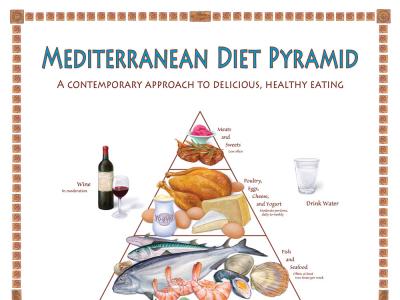
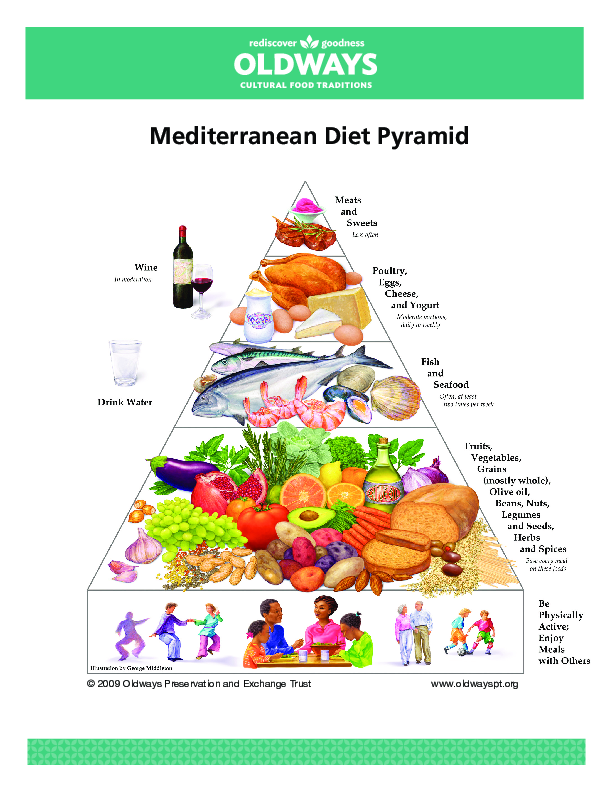
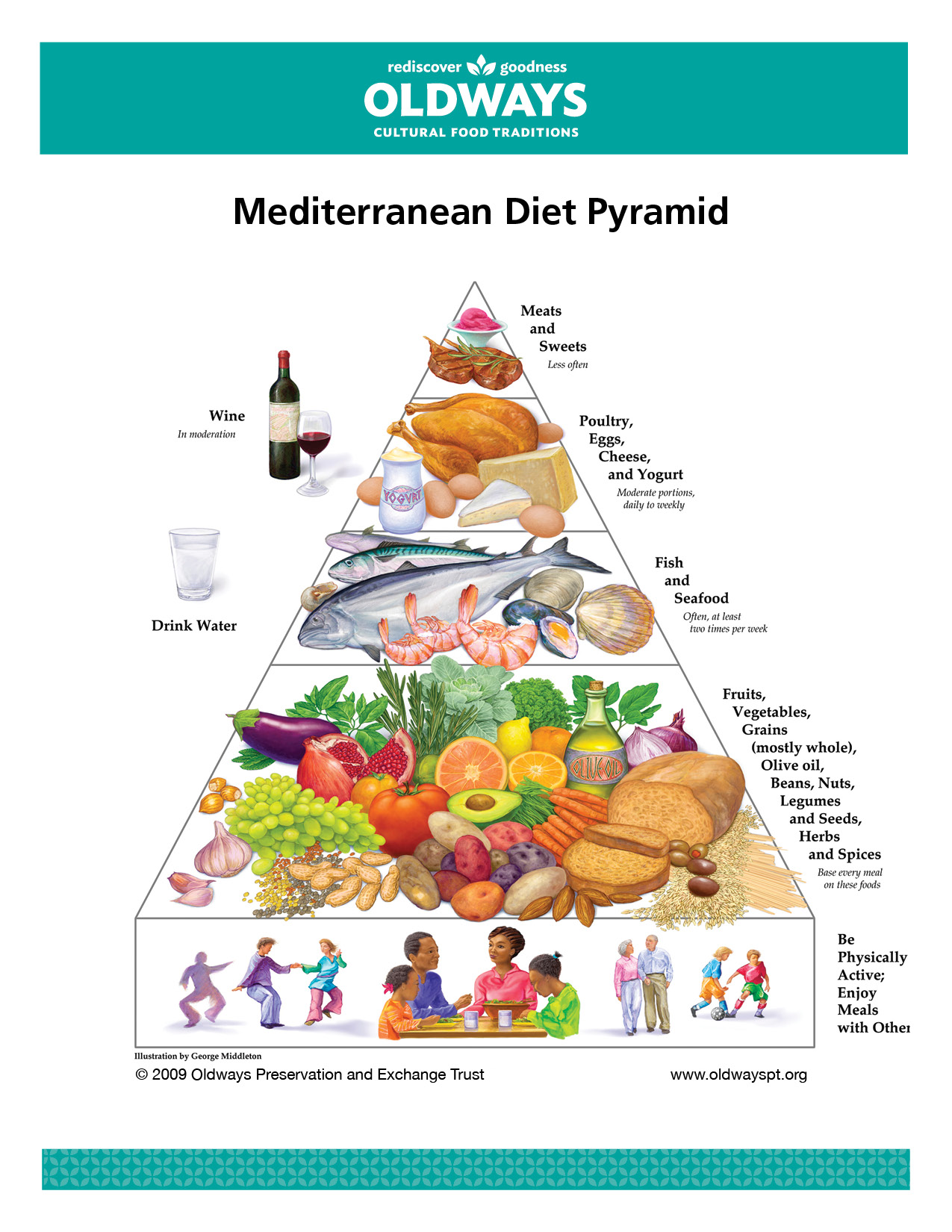
The major update in the Mediterranean Diet Pyramid is gathering plant foods (fruits, vegetables, grains, nuts, legumes, seeds, olives and olive oil) in a single group to emphasize their health benefits. The scientific committee made this change to draw attention to the key role of these delicious and healthy plant foods. A new feature on the Mediterranean Diet Pyramid is herbs and spices, for reasons of both health and taste. Also, herbs and spices contribute to the national identities of various Mediterranean cuisines. The committee emphasized the healthfulness of fish and shellfish, highlighting the benefits of eating fish and shellfish at least two times per week. Click here to download the complete notes for the 2008 Mediterranean Diet Pyramid Update.


The Mediterranean Diet Pyramid
Dietary data from the parts of the Mediterranean region that in the recent past enjoyed the lowest recorded rates of chronic diseases and the highest adult life expectancy are characterized by a pattern similar to the one illustrated in the list below. The healthfulness of this pattern is corroborated by more than 50 years of epidemiological and experimental nutrition research. The frequency and amounts suggested are in most cases intentionally nonspecific, since variation was considerable. The historical pattern includes the following (several parenthetical notes add a contemporary public health perspective):

  • An abundance of food from plant sources, including fruits and vegetables, potatoes, breads and grains, beans, nuts, and seeds.
  • Emphasis on a variety of minimally processed and, wherever possible, seasonally fresh and locally grown foods (which often maximizes the health-promoting micronutrient and antioxidant content of these foods).
  • Olive oil as the principal fat, replacing other fats and oils (including butter and margarine).
  • Total fat ranging from less than 25 percent to over 35 percent of energy, with saturated fat no more than 7 to 8 percent of energy (calories).
  • Daily consumption of low to moderate amounts of cheese and yogurt (low-fat and non-fat versions may be preferable).
  • Twice-weekly consumption of low to moderate amounts of fish and poultry (recent research suggests that fish be somewhat favored over poultry); from zero to four eggs per week (including those used in cooking and baking).
  • Fresh fruit as the typical daily dessert; sweets with a significant amount of sugar (often as honey) and saturated fat consumed not more than a few times per week.
  • Red meat a few times per month (recent research suggests that if red meat is eaten, its consumption should be limited to a maximum of 12 to 16 ounces [340 to 450 grams] per month; where the flavor is acceptable, lean versions may be preferable).
  • Regular physical activity at a level which promotes a healthy weight, fitness and well-being.
  • Moderate consumption of wine, normally with meals; about one to two glasses per day for men and one glass per day for women. From a contemporary public health perspective, wine should be considered optional and avoided when consumption would put the individual or others at risk.

Download
The Updated Mediterranean
Diet Pyramid


Download PDF
Download
The Mediterranean Diet Pyramid
for Children


Download PDF

Purchase an illustrated poster of the CLASSIC Mediterranean Diet Pyramid in our store.

  • The New Updated Mediterranean Diet Pyramid Poster will be available in June 2009.
  1. Common Foods Of The Medierranean Diet
  2. Bread, Pasta, Grains
    Bread, Pasta, Rice, Couscous, Polenta, Potatoes
  3. Fruits
    Olives, Avocados, Grapes
  4. Vegetables
    Spinach, Eggplant, Tomatoes, Broccoli, Peppers, Mushrooms, Garlic, Capers, Beans
  5. Legumes, Nuts
    Almonds, Walnuts and other Nuts; Chick Peas, White Beans, Lentils and other Beans; Peanuts
  6. Olive Oil
  7. Cheese & Yogurt
  8. Fish
    Shellfish, Sardines,Tuna
  9. Poultry
    Chicken
  10. Eggs
  11. Sweets
    Pastries, Ice Cream, Cookies, Fruit
  12. Meat
    Veal, Lamb
    Daily Exercise: walking, house cleaning, running, soccer, tennis, golf, swimming, hiking, scuba diving, basketball, baseball, football, skiing, surfing, yard work, rollerblading, dancing, weight lifting, love-making.

    Alcohol is traditionally consumed by adults in moderation and with meals, but consumption should be avoided during pregnancy and whenever it would put the individual or others at risk.

    Learn more about the Mediterranean Diet

    Read more about scientific studies on the Mediterranean Diet

    Discover the history of the Mediterranean Diet


    return to top


copyright 1999-2005, oldways preservation trust