


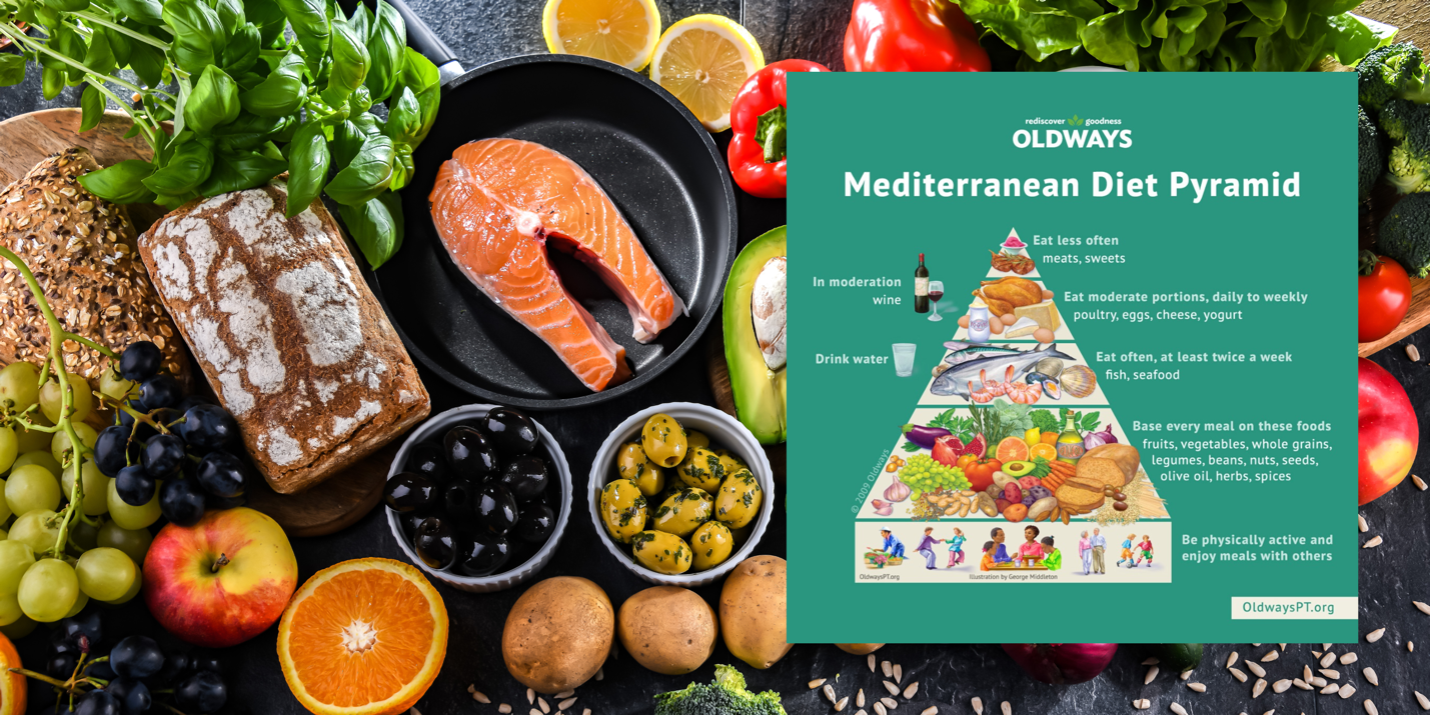
In 1993, Oldways created the Mediterranean Diet Pyramid with the goal of preserving and promoting traditional ways of eating and traditional ingredients from the region.
Since then, the Mediterranean Diet has become one of the most widely recommended diets in the world, supported by physicians and  nutrition professionals alike. It includes healthy fats like olive oil, an abundance of vegetables and fruits, herbs, seafood, beans, whole grains, and non-food-related components like movement and togetherness. Unlike fad diets that cycle in and out, the Mediterranean Diet is supported by decades of reputable scientific research, recognized by outlets like U.S. News as one of the best diets out there.
Now, Oldways is introducing another way to share in the Mediterranean Diet close to home – wherever that is for you! – through a new nutrition and cooking program, “A Taste of the Mediterranean” (ATOTM). This six-lesson nutrition and cooking program brings the Mediterranean Diet Pyramid to life, with each weekly class covering a specific food group from the Mediterranean Diet Pyramid.
ATOTM is packed with healthy eating habits and simple, delicious recipes, but it’s okay to start small. Here are six bite-sized lessons from each chapter of “A Taste of the Mediterranean”:
The quality of the fats in your diet is more important than the quantity of fats in your diet.
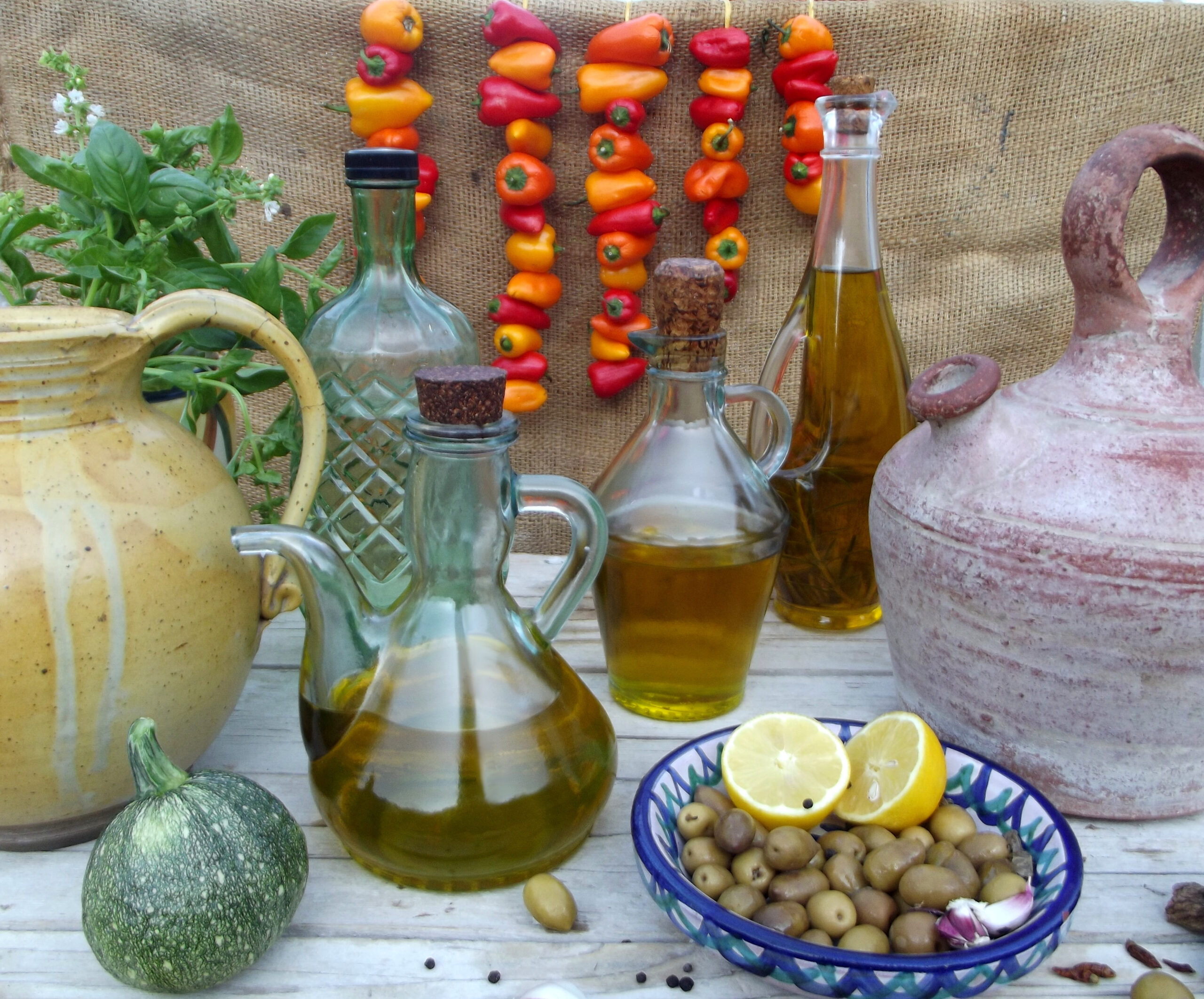 Healthy fats are found at the base of the Mediterranean Diet Pyramid, meaning they should find a place in every meal! From crunchy nuts to versatile olive oil, there are so many healthy fat sources that can be incorporated into all of your meals throughout the day. Try adding a handful of nuts into breakfast yogurt, sprinkling seeds over your lunchtime salad, and, of course, cooking your dinner in olive oil.
Eating more fruits and vegetables is easy and affordable.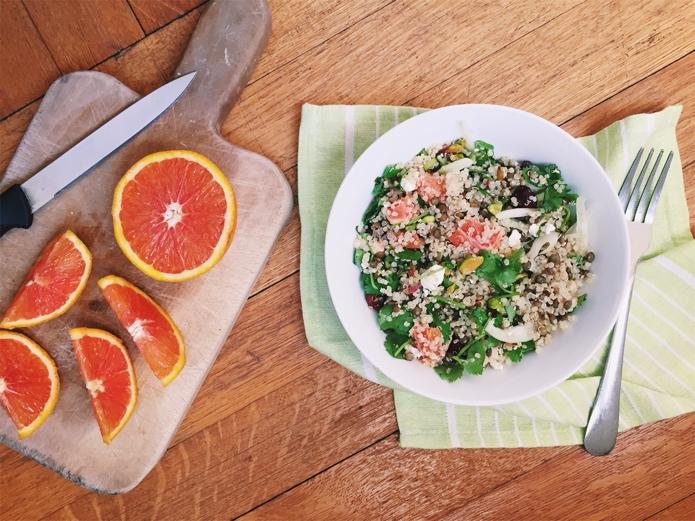
Making vegetables and plant-based ingredients the stars of your meals is a surprisingly cost-effective way to keep your grocery bills down, with multiple ways to keep prices even lower. Doing your own cooking, using canned and frozen produce, shopping seasonally and only buying what you’ll eat can all impact your bills for the better.
Eating more whole grains is a small change that can have a big impact.
From barley to whole wheat, whole grains are a huge component of the Mediterranean Diet. A grain is considered whole as long as all three original parts — the bran, germ, and endosperm — are still present in the same proportions as when the grain was growing in the fields. Sometimes, it can be tricky to sift through the language surrounding grain products in grocery stores: but if you see the Whole Grain Stamp on an item, you can be confident it contains whole grains.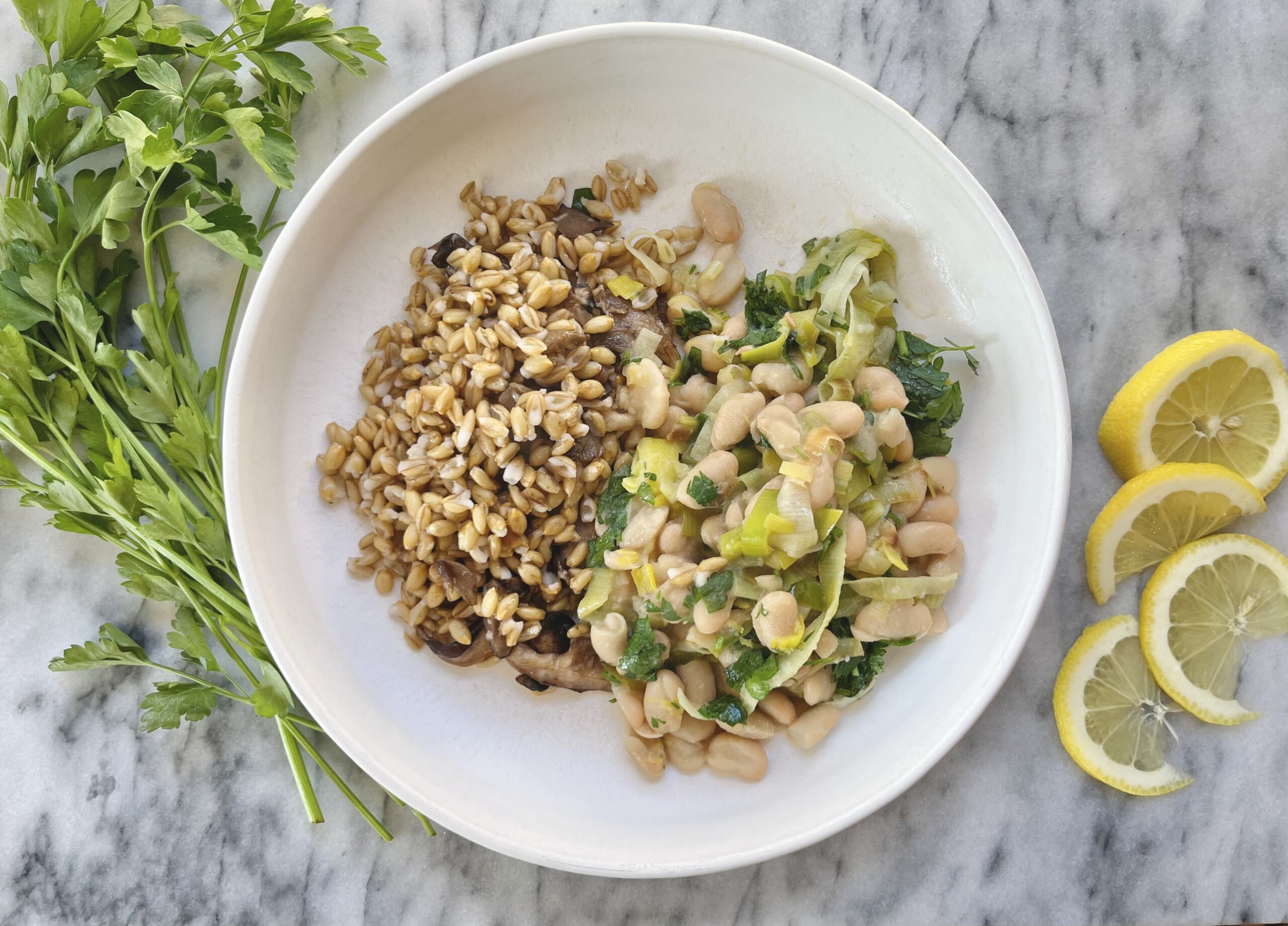
Historically, meat in the Mediterranean was a lot more expensive than it is today, meaning it was reserved for special occasions instead of daily meals.
You don’t have to be an entirely plant-based eater to enjoy plant-based proteins. Beans, peas, chickpeas and lentils are all fabulous sources of this macronutrient while also providing plenty of fiber and other essential micronutrients. These powerhouses are also extremely affordable, whether you opt for dried, canned or frozen.
Dairy products were often fermented to prolong their shelf life.
Although dairy was enjoyed in the Mediterranean, it was not as common in its fluid form. Instead, milk was made into fermented products like yogurt and cheese, through which “friendly bacteria” prevent the growth of harmful bacteria. 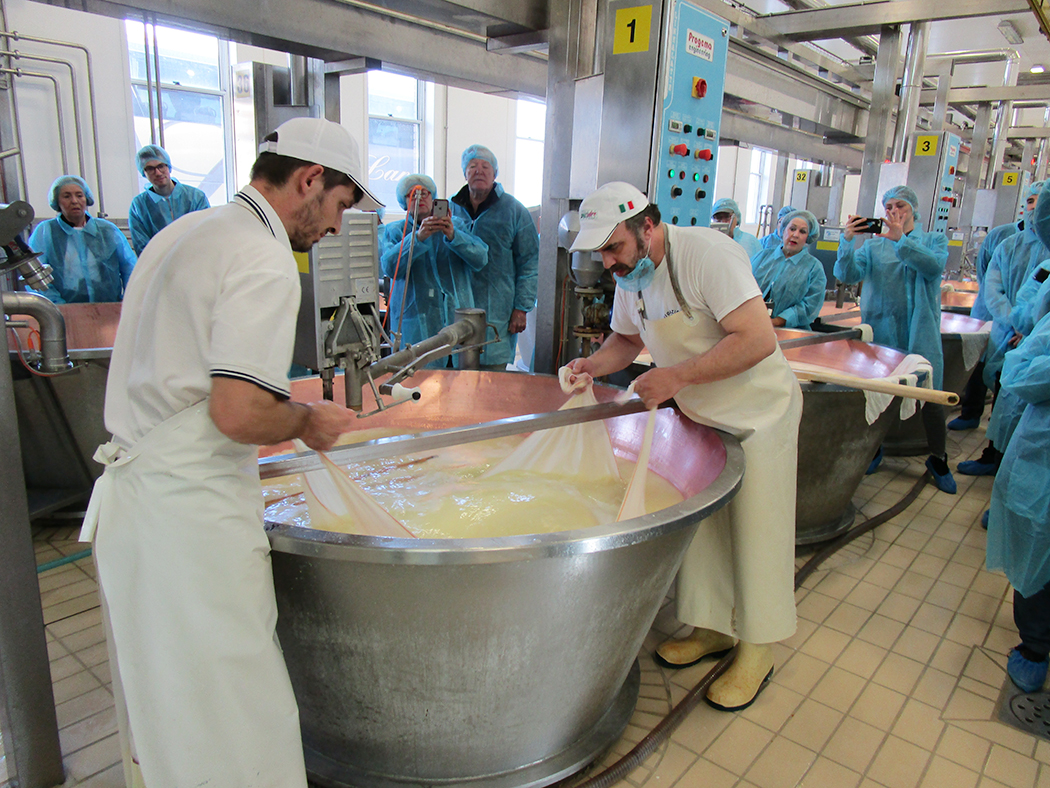
Some of the time-tested techniques used to make traditional and raw milk cheeses like Parmigiano Reggiano and Le Gruyère AOP include making cheese in copper vats, aging on wood boards or in underground caves, and using cultures native to the region. Practices such as these are worth preserving as important parts of our global gastronomic heritage.
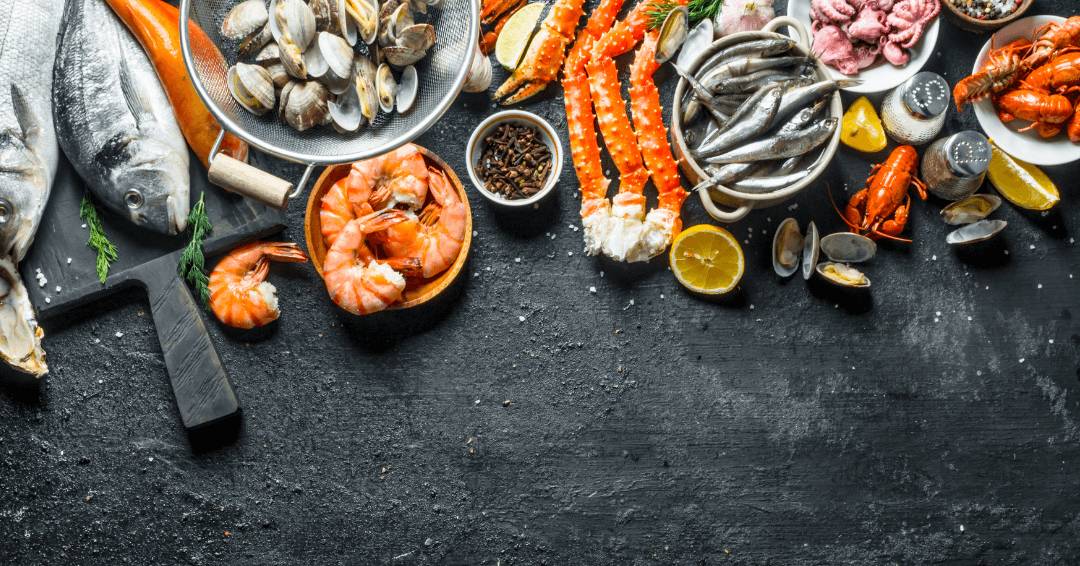
In many traditional Mediterranean dishes, seafood is used as a flavoring or garnish to plant-based meals.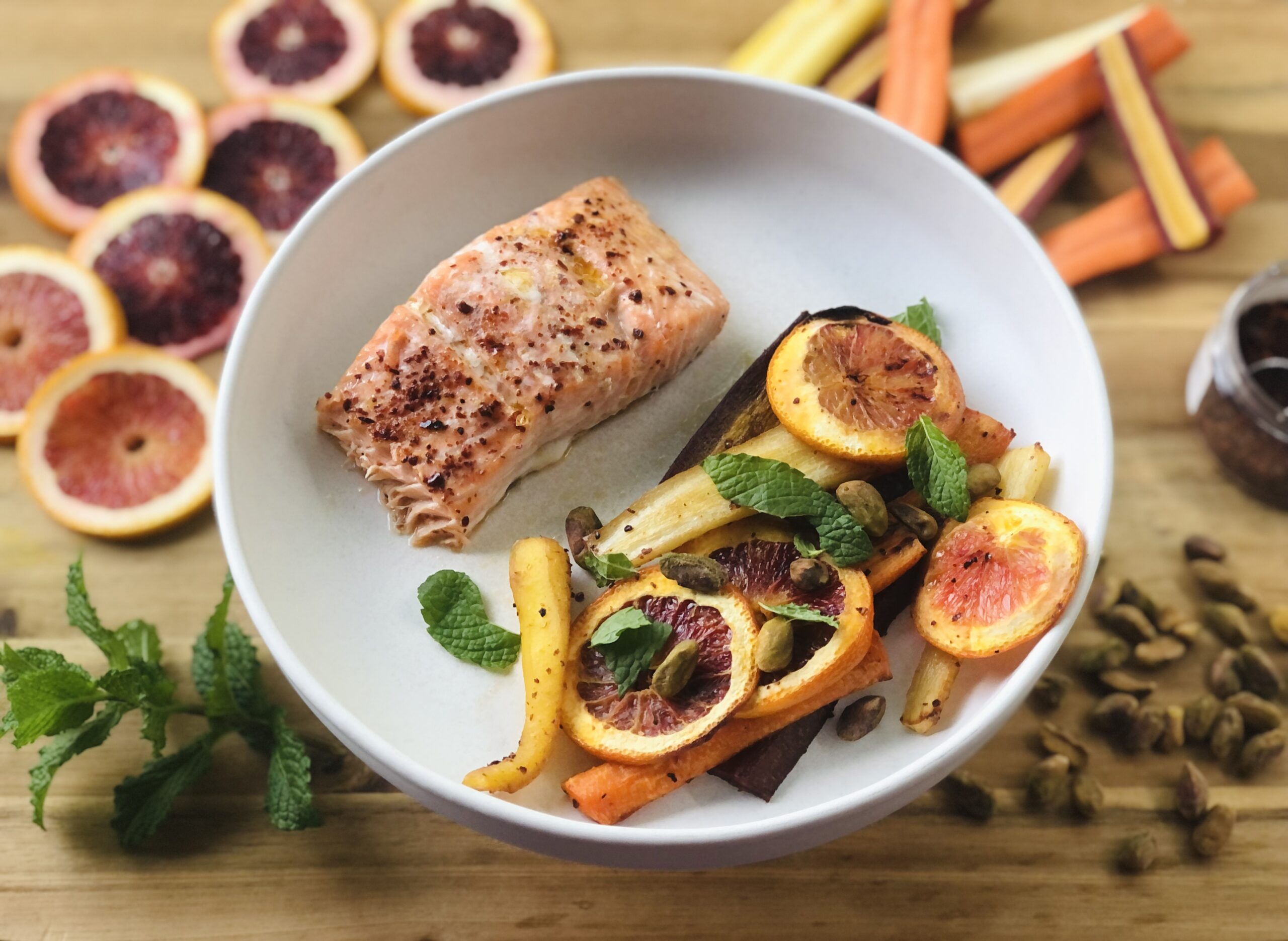
Seafood is one of the few sources of omega-3 fatty acids, an essential type of fat that helps support heart health and brain health. It’s also a versatile accompaniment to many meals. Try baking white fish with lemon, vegetables of your choice, and olive oil in the oven; grill up some salmon on a cedar plank for a smoky finish; or sauté up shrimp to accompany a pasta dish.
Intrigued by these bite-sized lessons? The full “A Taste of the Mediterranean” curriculum offers six weeks’ worth of wisdom to help whole communities better understand the value of the Mediterranean Diet. But we can’t spread the word without you! This curriculum relies on passionate people who want to bring ATOTM to their local libraries, cultural centers and beyond as teachers.
Help others learn to taste the Mediterranean – and use ATOTM10 for 10 percent off through the month of January – keep an eye out for classes being taught near you, or dive into the Mediterranean goodness through recipes, resources and more.


Leave a comment